

Access the first part of the interview here.
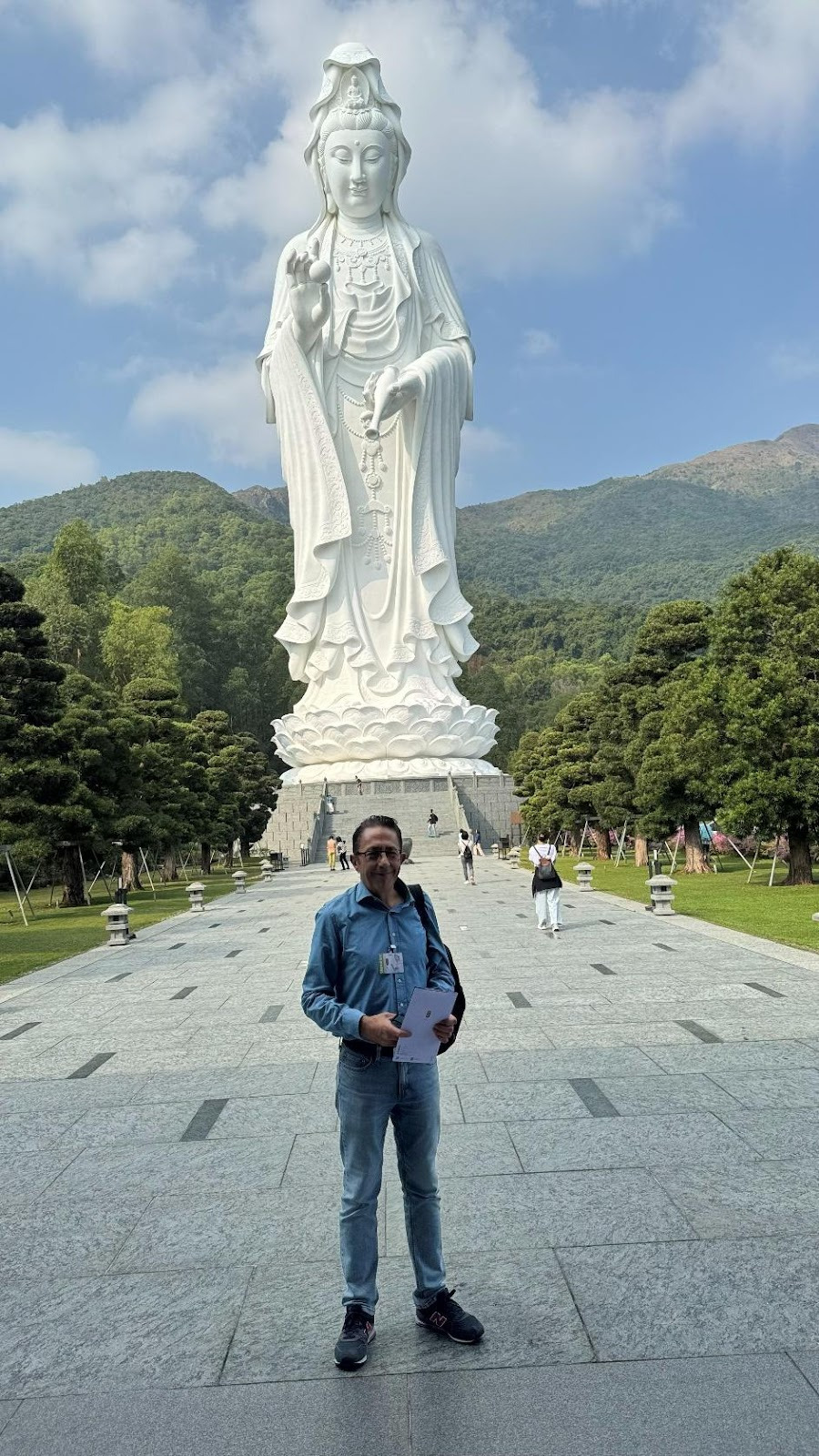
BDE: From your perspective, how do you discuss the Buddhist Counseling and equivalent Christian practices? What points of encounter and disagreement do you perceive?
FJSF: If I really liked something about these studies, it was their eminently experiential nature. It is an area where, without a doubt, there are many more confluences than divergences. Practices, beliefs and methods are very different realities, but the practical dimension of life offers a captivating perspective. After all, the believer - whether Buddhist or Christian - is faced with the same psychoaffective nature and the same social reality that, in one way or another, conditions human internality.
Psychospiritual processes go hand in hand: the experience of suffering, the desire for happiness, the inner search, the confrontation with one's own mind and affectivity, difficulties in meditation, conflicts with beliefs, the yearning for a life based on values, forging a clean conscience, authenticity... and the liberation of the ego. These challenges that I have encountered among my companions, lay people and Buddhist monks, are the same as those that I myself have experienced in my spiritual process and those that I have been seeing in so many people I have accompanied during my more than 30 years of priesthood.
With this I do not suggest that both realities are identical, but that, with regard to the process of spiritual growth and development, people face very similar situations, beyond the principles that govern their path. For example, the reality of suffering or the way of coping with grief for loved ones. Each tradition offers doctrinal elements derived from its own beliefs, capable of guiding and helping in these processes. But the psychological and spiritual dimension that emerges in the midst of these situations is the same. And, in the same way, a deviated or incorrect view of one's own beliefs can have a negative effect on the psychological process.
It is clear that, in accompaniment, the process cannot be abstracted from the implications of beliefs, since they often act as the engine, orientation and support of experiences. Let me give an example: within Christianity, there is a belief in paradise, purgatory or hell. The fear aroused by the possibility of condemnation — if a person is not open to the sense of God's love and mercy — can promote an awareness of guilt and fear. In my experience with Buddhism, I have seen something similar when the believer has a distorted view of karma, merit or reincarnation, which can become a major source of suffering. They are different beliefs, but with a similar psychological impact, whose treatment and help necessarily involves purifying and reordering those beliefs in their own context.
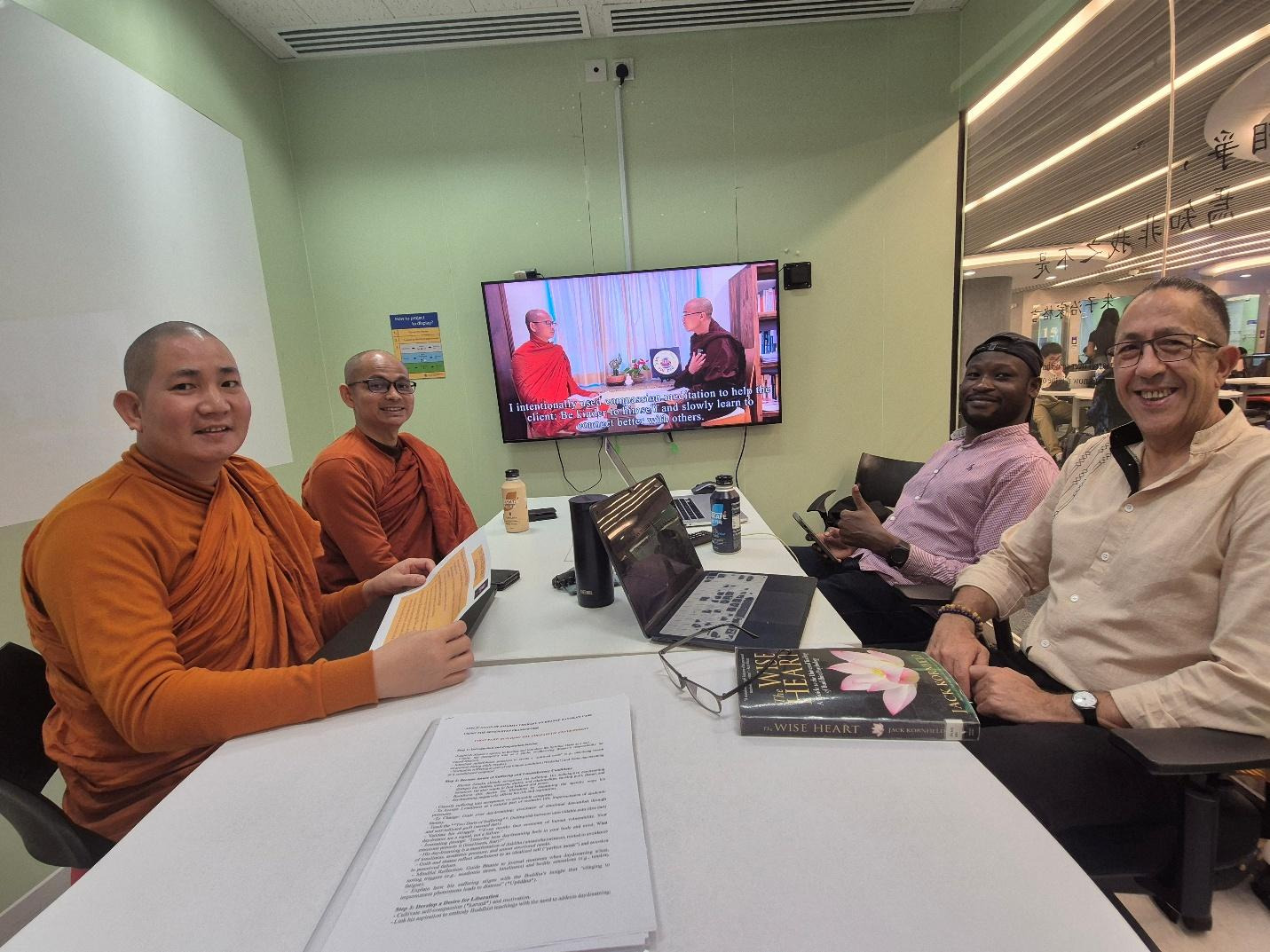
BDE: What differences would you highlight in the way in which both traditions address such fundamental realities as human suffering, compassion and accompaniment in the face of death or grief?
FJSF: In accompaniment, both in one area and in the other, the same attitudes are enhanced: empathetic and attentive listening, acceptance, respect and presence. It is true that the vision of suffering in Christianity and in Buddhism is very different, as are the beliefs in life beyond death, which gives a specific framework to accompaniment in these situations.
But it is also true that, in general, every human being wants to get rid of suffering, and in accompaniment—Buddhist, Christian or simply psychological—he seeks to get rid of it. Buddhism is very clear about the causes of human suffering and acts from there. In Christianity, however, there have been large sectors that considered - wrongly but very generalized - that it was necessary to simply accept that suffering and live with it, and even tendencies towards the search for suffering as a means of purification. Nowadays, the Christian perspective is more similar to the Buddhist perspective, insofar as it is perceived that not all suffering should just be accepted. For example, for Christian mystics, the causes of human suffering lie in ignorance, attachment, ego, etc. And this is something that an objective view of the Gospels also reveals. And the consequence of this is that liberation from suffering, or at least from much of it, is possible through an authentic spiritual path.
Another question is the vision or perception of inevitable suffering and of how to assimilate or experience it. Here the perspectives of the Christian faith are very different from the Buddhist one, although in the field of mental health there is no contradiction.
The topic of compassion has interested me in a particular way. Normally, the concepts or terms that are used do not always correspond to their original meaning. The term compassion, for example, in the Spanish language, has negative connotations of condescension. Something similar to what happens with the word, most used in Christianity, of mercy. However, when you approach the original content, the coincidences are staggering. Thus, compassion seen from its meaning in the Pali language (Karuna) or the word mercy (seen in its etymological sense in Hebrew) largely agree in its meaning. Something similar could be derived from the concept contained in the Pali term of Put it on, which in Christianity we would translate as love. I found it interesting to discover that, for example, Thich Nhat Hanh also preferred to translate the term Put it on like love.
I find a major difference in accompaniment in the face of death and grief, where beliefs play an extremely important role. Personally, within my own Christian beliefs, I find it easier to support these processes with a belief in a paradise or in eternal life, where we will all meet again. Although I have also found throughout the course that Buddhist beliefs also have a great strength to support these processes in a positive way.
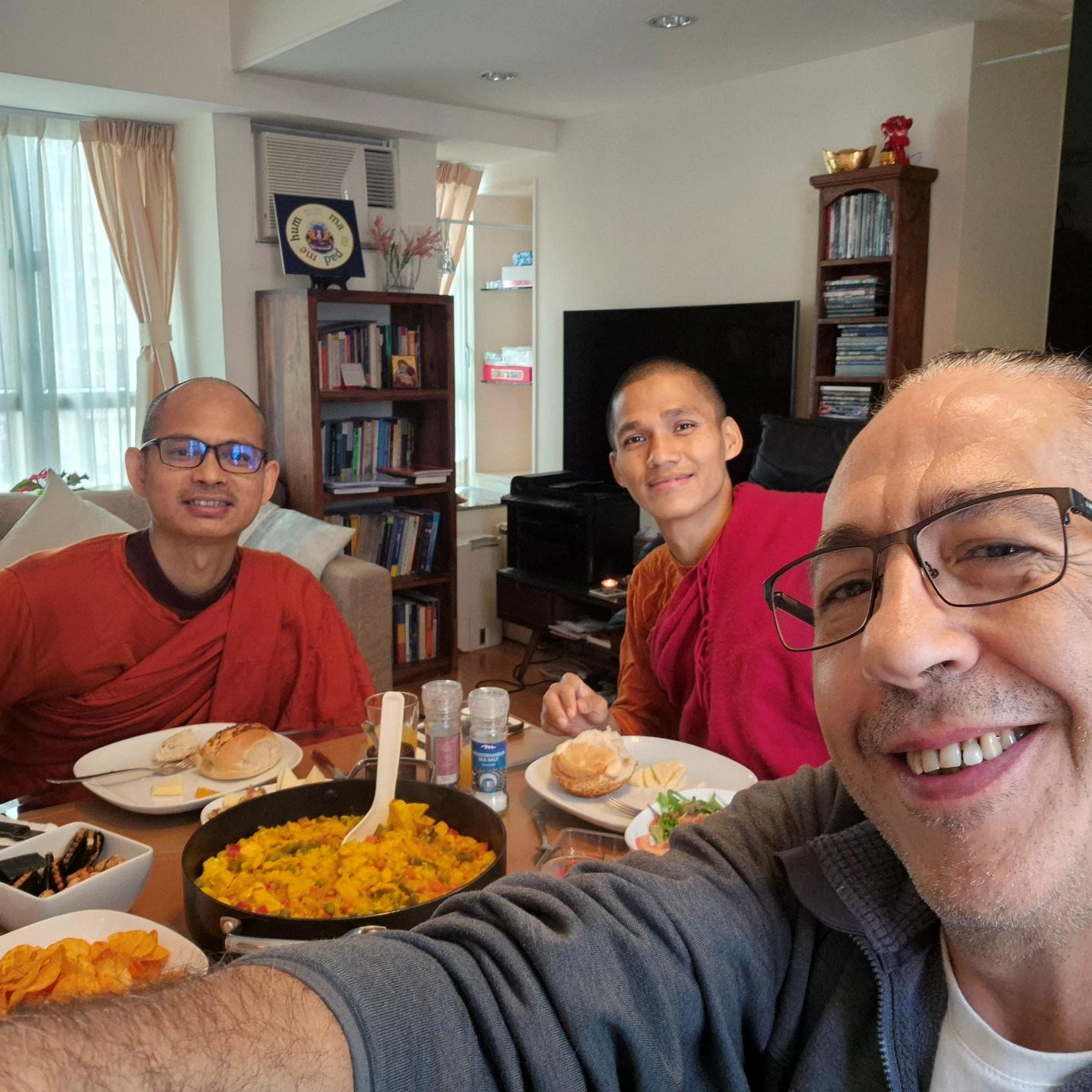
Father Francisco Javier Sancho Fermín, together with colleagues from the Buddhist Counseling course at the Center for Buddhist Studies of the University of Hong Kong.
BDE: What specific tools or techniques of the master's degree have you begun to integrate —or plan to do so—into your pastoral work, teaching work and your own personal life?
FJSF: I have learned a lot and I take a lot of guidance to put it into practice, both in accompaniment and in meditative and spiritual practice.
The deep interconnection that exists in both traditions between life, ethics and meditative practice provides a profoundly congruent landscape and background for both traditions. But, perhaps, where the instrumental aspect emerges most strongly is in the great practical tradition of meditation and understanding of mental processes. Something that is not so evident or so thoroughly developed in Christian meditative practice. Although the difficulties and problems faced by the practitioner are noted, especially on a mental and emotional level, they are not addressed in detail.
Everything related to what, in a global way, could be called understanding and educating the mind, perception and senses is of great value and help for the practitioner of Christian meditation. Of great value have also been the integration of the body, the practice of mindfulness, Dharma therapy, the creation of the spiritual oasis, the interaction and application of various psychotherapeutic methods...
I have already begun to introduce quite a few of these techniques and knowledge to spiritual processes and also to the practice of meditation, especially in the areas where I work on the subject of mental health and spiritual health.
BDE: Beyond the professional aspect, in what way has this encounter with Buddhism enriched or transformed your own spiritual experience and your identity as a Carmelite?
FJSF: I think I'm not yet fully aware of the extent to which this master's degree has positively influenced my own spiritual life. For now, I am aware of how it has helped me, in my personal meditative process, to enter more deeply into the meaning and value of everything. It has helped me to position myself with greater certainty and depth in the face of my own unconscious. It has led me to explore the deep roots of my mental and emotional processes, highlighting issues that I thought I had overcome, but that were only appearances.
It has also led me to understand much better the psychospiritual processes that are being forged on a person's spiritual journey and to be able to interpret aspects that until then were not entirely clear to me.
Today my prayer, thanks to what I learned and practiced during the master's degree, is much more conscious and consistent. I am better able to position myself in the face of my mental and emotional processes with greater objectivity and awareness. And all of this makes me live prayer and meditation with greater benefit for my life and for my mission at the service of others. It has also offered me many lights to understand and support other people's spiritual processes.
BDE: To summarize, if you had to distill the essence of this whole journey, what would you say has been the most valuable learning you take with you?
FJSF: Despite having learned so much, and so many benefits received, what I would place as the most valuable thing, without a doubt, has been the close and friendly human contact with my classmates and teachers. Touching the hearts of all of them, so eager to live authentically and to help others, shows me that the goodness inherent in human beings cannot be limited to beliefs or cultures. Both are vehicles for the positive transformation of the world. And that fills us with joy and hope, as well as widening the heart.
A single word could condense everything learned and experienced: gratitude, deep and sincere.
Links:
Tibetan Buddhism and Carmelite Spirituality, interreligious meeting in Avila, Spain, July 2024
——————————
Daniel Millet Gil has a law degree from the Autonomous University of Barcelona and has a master's degree and a doctorate in Buddhist Studies from the Center for Buddhist Studies of the University of Hong Kong. He received the Tung Lin Kok Yuen Award for Excellence in Buddhist Studies (2018-2019). He is currently a regular editor and collaborator of the web platform Buddhistdoor in Spanish. Millet is the founder and president of the Dharma-Gaia Foundation (FDG), a non-profit organization dedicated to the academic teaching and dissemination of Buddhism in Spanish-speaking countries. This foundation also sponsors the Catalan Buddhist Film Festival. In addition, he serves as co-director of the Buddhist Studies Program of the Fundació Universitat Rovira i Virgili (FURV), a joint initiative between the FDG and the FURV. In the editorial field, Millet manages both Editorial Dharma-Gaia and Editorial Unalome. He has published numerous articles and titles in academic and popular journals, which are available in his Academia.edu profile: https://hku-hk.academia.edu/DanielMillet.


