

Benoy K. Behl has been a privileged witness to the beauty, kindness and compassion that art can bring to the world. An art historian, documentary director and photographer, Behl (New Delhi) is the only person who has documented Buddhist heritage in 19 regions in 17 countries. For this reason, his name is already part of the Limca Records book, as he is the photographer and art historian who has traveled the most (Limca is an annual reference book published in India, which documents India's achievements in multiple fields).
The turning point in his career came when he photographed the ancient Ajanta cave paintings, the oldest preserved paintings from the historical period in the Indian subcontinent. In the horseshoe-shaped gorge of the Waghora River in Maharashtra, in western India, thirty-one caves were excavated in two phases. The first one dates back to the 2nd century BC. C. and the second, between the 4th and 6th centuries AD. C. Ajanta's wall paintings and sculptures describe Jataka stories, stories about the Buddha in their previous lives, and the caves were used for centuries as a retreat for Buddhist monks during the monsoon months.
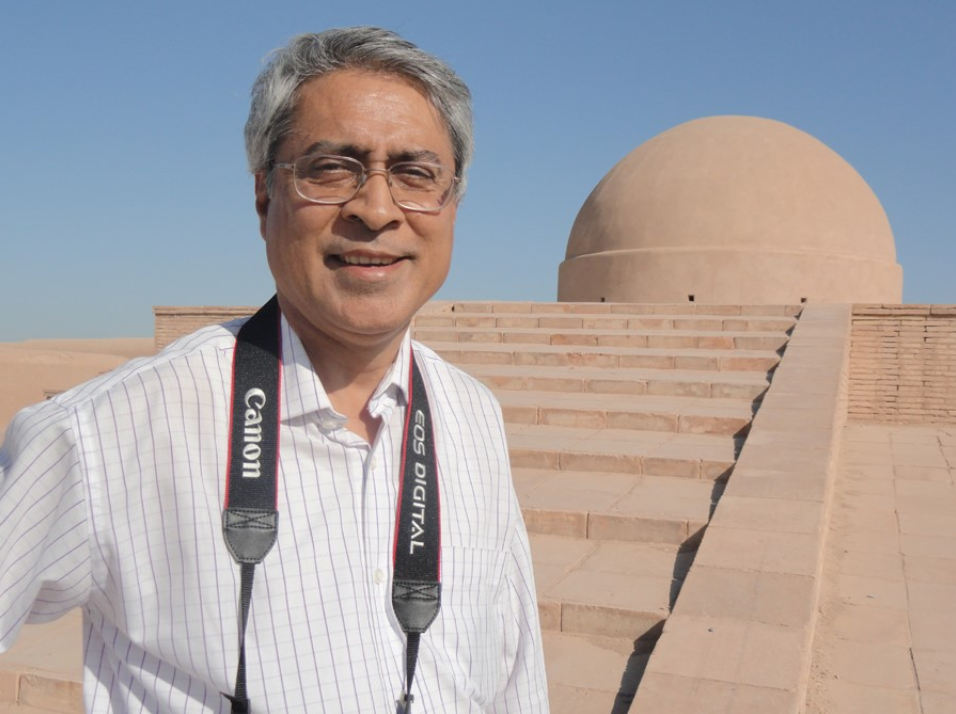
Behl photographed the Ajanta paintings with their authentic colors and details in 1991 (and a year later, he returned to do the work again and perfected it). After publishing these photographs in National Geographic magazine, museums and universities around the world invited him to give lectures and show the paintings. The director general of the Archaeology Service of India wrote to him: “you have conquered the darkness of the Ajanta Caves”.
Benoy K. Behl is one of the best ambassadors of ancient Indian art through his books, photographic exhibitions and documentaries. Some of his documentaries, such as “The Indian Roots of Tibetan Buddhism” and “The Indian Deities Venerated in Japan”, have won several international film festivals.
Buddhistdoor en Español: You have mentioned in many articles the impact that your photographic work of the Ajanta wall paintings had on you. After visiting so many places around the world, which have the best Buddhist art, what did you find extraordinary about the Ajanta murals?
Benoy K. Behl: “I have had the great fortune to see and document the most beautiful Buddhist art, in places such as the Borobudur Stupa, Indonesia; Sukhothai, in Thailand; the 12th century paintings in Bagan, in Myanmar; the Dungkar Caves, in the Tibet Autonomous Region, the cultural history museums of Bangladesh, the Sigiriya Caves, in Sri Lanka. What is extraordinary in all of this art is its sublime vision of life, which gives a deep inner look to painted and sculpted figures. It is an exquisite art that transports you, away from the noise and clamor of the material world, to the peace that can be found inside.
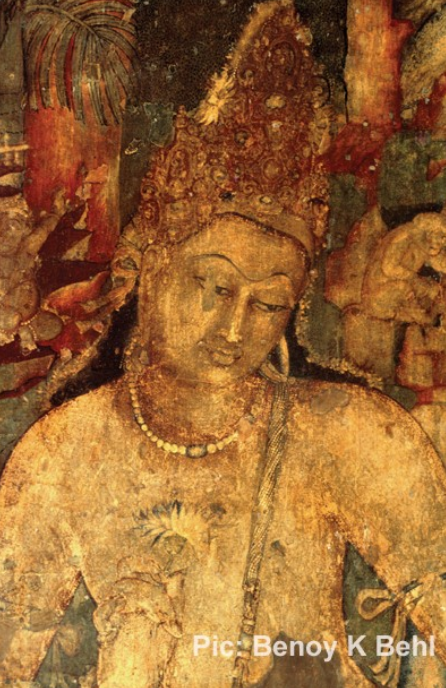
After seeing this wonderful collection of Buddhist artworks around the world, one returns to its most sublime source. The Ajanta paintings are the most complete and exquisite consecration of the spirit of compassion in Buddhism. There is a delicacy in this art that moves and transforms you completely, you just have to give it the opportunity and spend some time in its presence. Academics and pilgrims have always talked about 'the world of Ajanta', and this is what I experienced there. The thousands of kind and kind figures painted on the walls of the Ajanta caves transport you to a world of compassion and kindness. These paintings convey a totality in his vision of life, which changes you forever. Ajanta's compassionate message is recorded in an inscription on the spot, which reads: 'The joy of giving filled him so much that there was no room left for the feeling of pain'”.”
BDE: Let's go back in time. If you could recreate in the cinema the atmosphere, the sounds and the people who worked and visited the caves during the two phases of construction of the Ajanta Caves, what would we see?
BKB: “The main thing we could see is a multitude of dedicated people, playing their part in life, sculpting and painting. They were guilds of artists who considered it their dharma, or sacred duty, to create art that would transmit the knowledge and understanding of life that they had received from their ancestors.”
BDE: Are Ajanta's paintings in danger?
BKB: “In the 1920-30 years, before Indian Independence, a team of Italian conservatives was invited to preserve the Ajanta murals. This was a disaster for the conservation of the paintings, since the conservators applied Shellac (a type of lacquer) on paints, since they believed it was the best way to preserve them. Over time, the Shellac it became yellowish and darkened a lot with the amount of dust that accumulated from the atmosphere. For decades, the Archaeology Service of India (SAI) has been carefully eliminating the Shellac, so that the colors and details of the paintings would appear. Some of this delicate exercise has been successfully carried out, but much more remains to be done.
In addition to intrusive human activities, such as the application of Shellac, there are other natural factors that endanger paints for the future. There are some moisture seeps coming from the distant outer summit above the cave. The SAI is doing everything possible to protect the paints.
Another damaging factor is the accumulation of moisture and bacteria inside the caves, caused by the large number of visitors in recent years. An Interpretation Center has been created near the caves, in the hope that many visitors will go there and not spend so much time in the caves.”
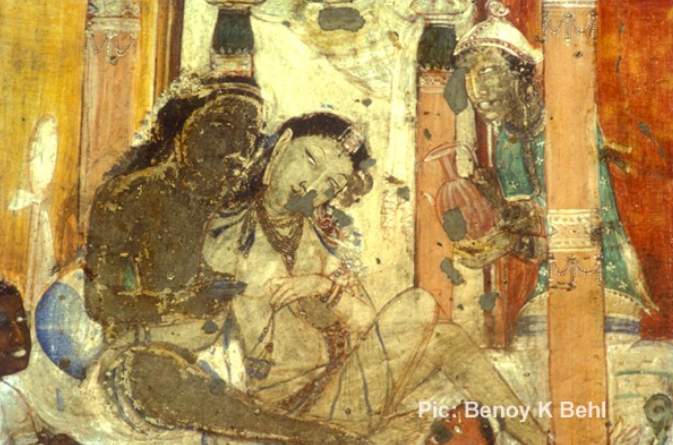
BDE: India treasures one of the most beautiful pictorial traditions in the world, but it seems that many of the artists of antiquity are unknown today. Could you mention some of the highlights of the Chitrasutra of the Vishnudharmottara Purana, the oldest art treatise in the world?
BKB: “The legacy of the pictorial tradition that Ajanta artists received was documented in the Chitrasutra, from the 5th century A.D. This treatise provides hundreds of details on how to paint. For example, the Indian painter focused immensely on portraying the feelings of his characters through their eyes, since the eyes are the windows of the soul. So we found five types of looks that are described in the Chitrasutra: Chapakara or meditative, Matsyodara or loving, Utpalaptrabha, placid or peaceful, Padmapatranibha, scared or weeping, and Sankhakriti, angry or deeply in pain.
The Ajanta paintings were made by the heirs of a very long tradition. They were guilds of painters who painted palaces, temples and caves. The art of painting was his legacy, and his duty in life was to paint. As you can imagine, they had no need to write their names on the paintings. It was a great sense of importance and fulfillment, to play your part as part of the world.
These painters had a great compassion and vision for humanity, which moves and captivates us to this day.”
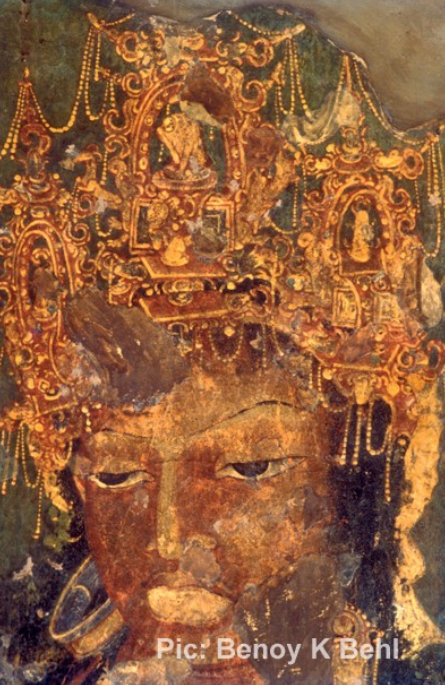
BDE: At what point did the Buddha in human form begin to be represented in the Ajanta caves, and in Indian art in general?
BKB: “Since the ego and the belief in our own identity are considered to be an illusion caused by the limitation of our senses, the focus was never placed on the individual. For about a thousand years, in ancient times, until the 7th century AD. C., an immense amount of art was produced in India. It represented deities, mythological beings, animals, plants, trees, forms that combined these beings with great harmony, and there were also representations of ordinary men and women. However, this art never reflected prominent figures, not even the kings under whose rule these works were created. The name of the artist was not mentioned either. According to the Chitrasutra, personalities are too unimportant to be represented in art. Art has a noble objective, to show the eternal, beyond the ephemeral forms of the world.
The purpose of the works of art was to transmit the Truth, as experienced by the artist. No thinker or artist claimed that only he had seen the Truth. In fact, great ancient Indian teachers, including Gautama Buddha and Mahavira, declared that they were only following in the footsteps of others who came before them. The emphasis was placed on the loss of the ego and not on its perpetuation. Art was a fundamental vehicle for the communication of these ideas.
One of the greatest contributions of this philosophical current is found in the absence of barriers between the spiritual world and the world of the senses. The art of this tradition fully shares life experiences in all their aspects. He sees our perceptions, from the sensory to the highest spiritual planes, as a continuous journey. It empowers our powers and perception, to help us understand and achieve the divine, through all our resources, including emotional resources. This philosophy does not attempt to deny our response to the splendour of the world around us. In fact, he sees beauty as a reflection of the divine. For this reason, the human form is not presented in a way that can awaken the primal desires that become a burden. Instead, Indian art recognizes grace in all humans and also in other forms, and seeks to uplift us through our reaction to aesthetics.
Human-shaped Buddhas began to be seen in Indian art, along with other deities, as early as the 1st century BC. C—1st century AD. C. Therefore, during the second period of Ajanta, we can see these images frequently.”
BDE: You developed a low-light photography technique to photograph the Ajanta murals. How was the experience?
BKB: “Working at Ajanta was a technical challenge. This photograph in the dark captured details and colors that had never been known to the world before.
But what happened in the process of spending so many hours with these beautiful paintings was something different, which was, in fact, more important than the technical achievement. I received a constant and close exposure to ancient Indian art. It was the transformative experience of my life. Through these glimpses, clear knowledge emerged that compassion is all there is. Knowledge is different from something you read in a book. Knowledge is something that you know, that has become part of your consciousness.”
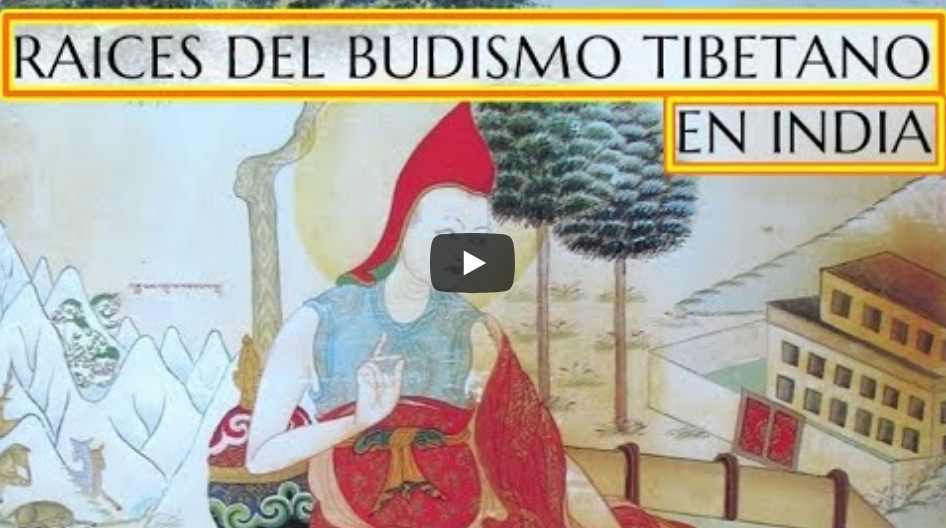
The documentary “The Indian Roots of Tibetan Buddhism” by Benoy K. Behl:
— — —
Mireia Pretus Labayen
She studied at the Ramón Llull University in Barcelona, obtaining a degree in journalism. He then took a course at the Escola Superior d'Imatge i Disseny (IDEP) on screenwriting and production. In 2001, he began his interest in Buddhism, and since then, he has studied and practiced with various Buddhist teachers, especially those from the Tibetan tradition. During these years she has collaborated intensively as a translator, especially simultaneous translation from English into Spanish for Buddhist teachers, and she has collaborated with the Casa del Tibet Foundation in Barcelona, the University of Mysticism of Avila and The Meridian Trust Foundation. He has been a member of the team of the Catalan Coordinator of Buddhist Entities. He currently works for the English NGO The Friendly Hand, coordinating educational and health projects in the UK, Spain, India, Peru and Sri Lanka.


