

You can read the first part of this article here
Comparative studies: the mirror of traditions
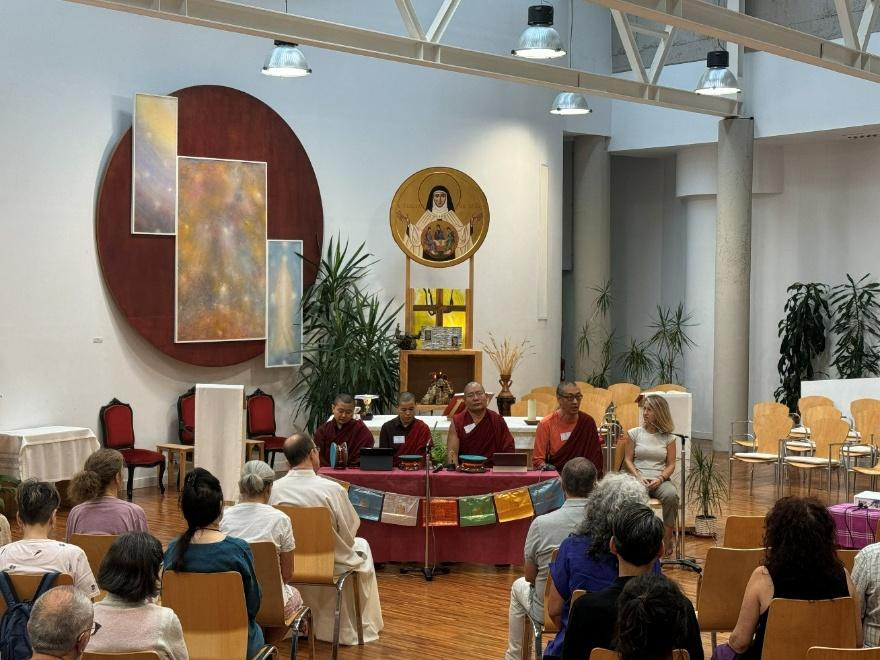
The fourth section of the volume, entitled “Comparative Studies”, constitutes another of the intellectual bridges of the meeting. In this space, reflection moves from individual exposure to relational analysis, allowing the inner life structures of both traditions to illuminate each other.
First of all, the doctor Francisco Díez de Velasco, professor at the University of La Laguna, in his chapter “Prayer and meditation. Comparative Perspectives”, starts from his uncertainty about the border between prayer and meditation and rehearses a reflective journey that revisits the comparative method. In dialogue with Michael Pye and with Raimon Panikkar's doubts (“about the limits of comparing religions”), he stresses the limits of the comparable and warns of two common risks: logocentrism (the mastery of concepts) and oculocentrism (the primacy of the gaze). To overcome them, it proposes a sensory and embodied twist that addresses the role of the body and the senses, without ignoring the entanglements of language and translation (for example, around the word “mind”). Recover Heiler and show areas of contact between prayer and meditation in practices such as hesychasm, where breathing is central, also incorporating tools from the neuroscience of religion (memory, automatisms and body correlates) to differentiate ways of praying and meditating. At the same time, it questions the contemporary standardization of mindfulness and closes with the “silence of the Buddha” (Anatta, Sūnyatā), arguing that comparison is more fruitful when it assumes conceptual limits and focuses on how practice transforms experience.
Subsequently, the professor Xabier Pikaza In his chapter “The visions and the encounter. Comparative Perspectives” explores the mysticism of the Orient—Hinduism, Buddhism and Taoism—in the face of Christian tradition. He analyzes the distinction between the symbolic “avatar” and the historical “incarnation”, stressing that Christianity seeks a personal encounter. While the East focuses on liberation from desire and self-knowledge, the Christian faith proposes an active and communal love. The author highlights the Wu-wei Taoist as a natural balance that dialogues with evangelical gratitude. Finally, he argues that true mysticism transcends the law to place itself on the level of grace.
The importance of this block lies in its capacity to systematize dialogue without losing the warmth of the human encounter. This is not a simple enumeration of similarities, but rather an exercise of rigor that respects the uniqueness of each path while identifying the common winds that drive them. This section reaffirms that comparison does not seek to dilute identities, but rather to enrich the understanding of what it means to be human in search of transcendence, offering the reader a clear cartography of the paths that the spirit takes to its center.
Works awarded the IV Teresa de Jesús Prize and Interreligious Dialogue
This section of the volume celebrates academic excellence and spiritual sensitivity through the works distinguished in the 4th Teresa of Jesus Prize and Interreligious Dialogue. Not only do these investigations demonstrate exceptional methodological rigor, but they also act as living bridges between Carmelite mysticism and the rich traditions of Tibetan Buddhism and contemporary philosophy.
“Two Spiritual Teachers: Saint John of the Cross and Nyoshul Khenpo” of James Wiseman (in English). This work begins with a brief biography of both spiritual teachers: Saint John of the Cross (1542-1591), the famous Spanish Carmelite reformer, and Nyoshul Khenpo (1932-1999), an equally well-known Tibetan teacher of the Dzogchen tradition. The author compares his teachings on the ultimate goal of spiritual life, highlighting striking similarities in his conceptions of union with God and the realization of the nature of the mind. The study analyzes how both teachers approach the spiritual path through three fundamental aspects: detachment or detachment, meditation as a central practice, and the role of loneliness, humility and love in the process of inner transformation.
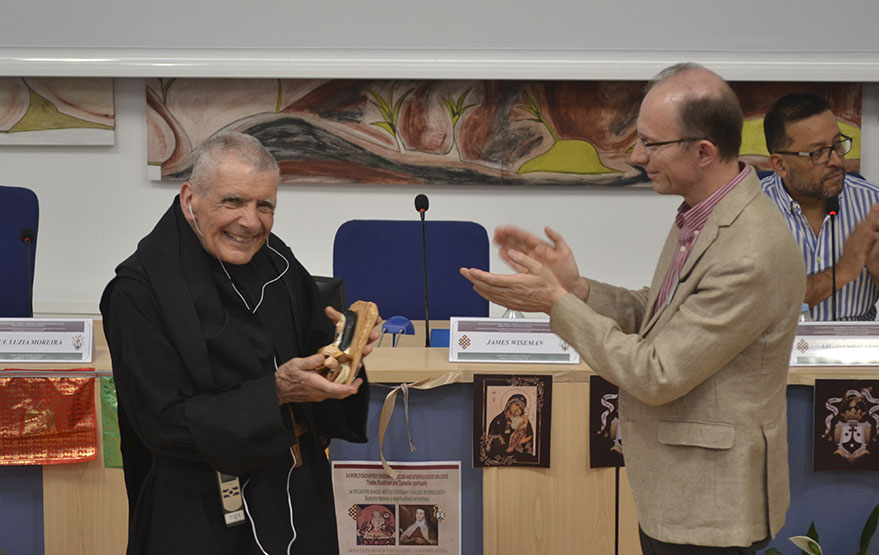
““The sight of God is to love”. Perspectives of interreligious dialogue from the heart of Saint John of the Cross to the teachings of Tibetan Buddhism of Dzogchen”, by Sue Luzia Moreira (in Portuguese). The author establishes a fertile dialogue between the mystical experience of Saint John of the Cross and the Dzogchen (Great Perfection) teachings of Tibetan Buddhism. It begins by exploring the fundamental bases for comparative analysis, considering both the openness of Christianity to dialogue and the introduction of Buddhism to Tibet. It presents Saint John as a figure who transcends the barriers of interreligious dialogue and examines the relationship between the ancient Tibetan religion of Bön and the Nyingma Buddhist school. The work delves into the meditative practice of Dzogchen and draws significant parallels with Sanjuanist prayer, concluding that both traditions, despite their doctrinal differences, share a common search for direct experience of the sacred.
“The sources. Comparison between the allegory of the fountain in Saint John of the Cross and in the text of the Supreme Source Tantra of the Dzogchen teaching of Tibetan Buddhism by Carlos Daniel García Rad (in Spanish). This comparative essay explores the allegory of the “source” in the Carmelite mystique of Saint John of the Cross —where it symbolizes eternal divinity as the source of grace, purification, and spiritual union in works such as Spiritual canticle and Dark Night, with an emphasis on prayerful silence, detachment and corporal-mental transformation—and on Supreme Source Tantra of the Tibetan Dzogchen. The latter presents it as the primary basis of pure and non-dual consciousness, promoting visualizations and meditations to dissolve the ego and realize luminous emptiness, converging on a transformative origin that prioritizes practical phenomenology, body, silence and shared itineraries of purification and egoic dissolution. However, they diverge between the personal and ascetic theism of Saint John (with God as Beloved and a purifying “dark night”) versus the impersonal and spontaneous non-theism of Dzogchen, thus enriching an intercultural dialogue without syncretisms and offering common paths for visualizing, contemplating and finding the sacred in Carmelite and Tibetan traditions.
The essay “Odyssey in three seasons by Wonhyo and San Juan de la Cruz” by Douglas Calvo Gaínza proposes a comparative journey between the Korean Buddhist mystic Wonhyo (617-686), illuminated in a tomb by recognizing the mind as the creator of dualities Samsara/Nirvana, and the Spanish Carmelite Saint John of the Cross (1542-1591), inspired in prison by the “ray of darkness” that unifies darkness and divine light. Structured in three seasons, the first explores the “coincidence of opposites” inspired by Nicholas of Cusa, where St. John integrates light and dark, and Wonhyo reconciles doctrines through the “one-mind” (Ilsim) that merges purity, pollution and vacuity (Shunyata), criticizing East-West divisions to promote a universal non-duality that unites divine love and emptiness. The second season addresses “transcendental eroticism”, comparing wedding metaphors in San Juan (chest, flowery bed) for the Soul-God union with tantric symbolism Yab-yum in Tibetan Buddhism, which merges compassion and wisdom in the sexual act towards enlightenment. The third culminates in the arrival to “Ithaca” as a circular self-discovery (Ouroboros), posing questions such as “Where does the divine end in me?” and prioritizing intuition over concepts.
“Reflection on the symbol”. Jean Baruzi, Michel de Certeau” by Imanol Bageneta Messeguer (in Spanish). This work examines the mystique of Saint John of the Cross through the perspectives of Jean Baruzi and Michel de Certeau, stating how the poetic symbol articulates spiritual experience in a secularized context where metaphysical certainty has declined. Baruzi highlights the noetic and cognitive value of mystical experience, studying it outside confessional limits, while De Certeau interprets this discourse as a “fable” that emerged from the absence and fundamental loss of the divine. Both approaches reveal that mystical language, operating through metaphors and paradoxes, does not seek to define God statically, but rather to use the instability of the symbol to express an ineffable reality that transcends traditional theological reason and allows for inner encounter. It is also argued that there is no pure experience prior to language, so the symbol is not a mere translation, but the necessary condition for spiritual experience to emerge into human consciousness. Finally, the author concludes that mystical philosophy must be nourished by this impulse of radicalization, leaving theological discourse on a parallel plane to privilege the transformation of the will and the search for the unconditioned.
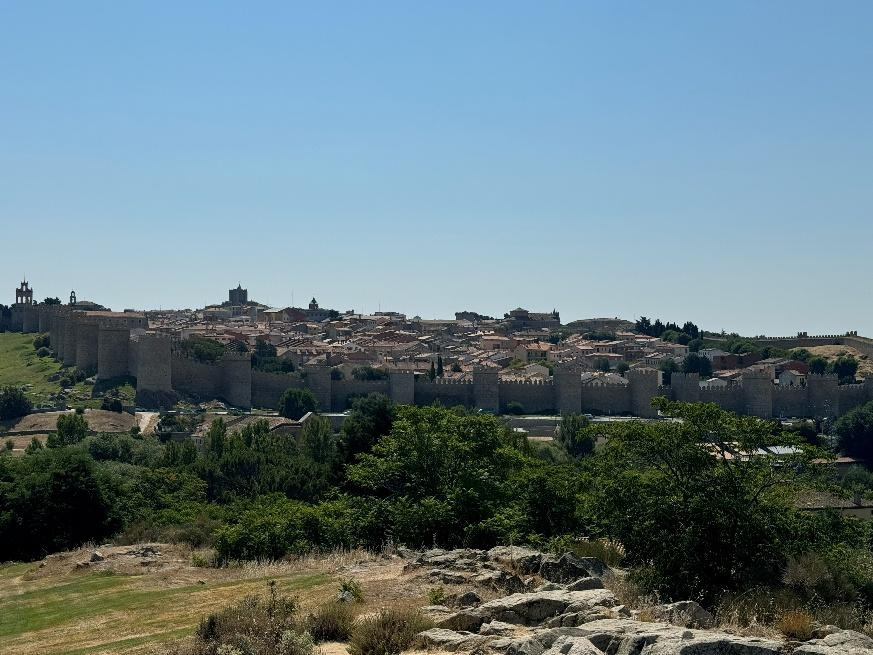
Out of the IV Prize Intl it was decided to include the text “Passion and union: contours of the common experience in the practice of Vajrayogini and the Carmelite tradition”, by Rebecca Wong (in English). The author establishes a dialogue between the figure of Vajrayogini, female deity of Tibetan Tantric Buddhism, and the Carmelite mystical tradition. It begins with an innovative methodology that intertwines two stories: one in Kathmandu and the other in Avila. Explain in detail the practice of Vajrayogini, their Mandalas, the paradise of Khecara (kingdom of Dakinis) and the eleven yogas associated with this practice. It draws parallels with the mystical experience of Teresa of Avila, exploring how both traditions express experiences of spiritual passion and transformative union, albeit through very different languages and cultural contexts. The study includes an analysis of visualization practices in both traditions, concluding that they share a deep understanding of inner transformation, summarized in the phrase “what we have to be is what we are”.
Conclusions
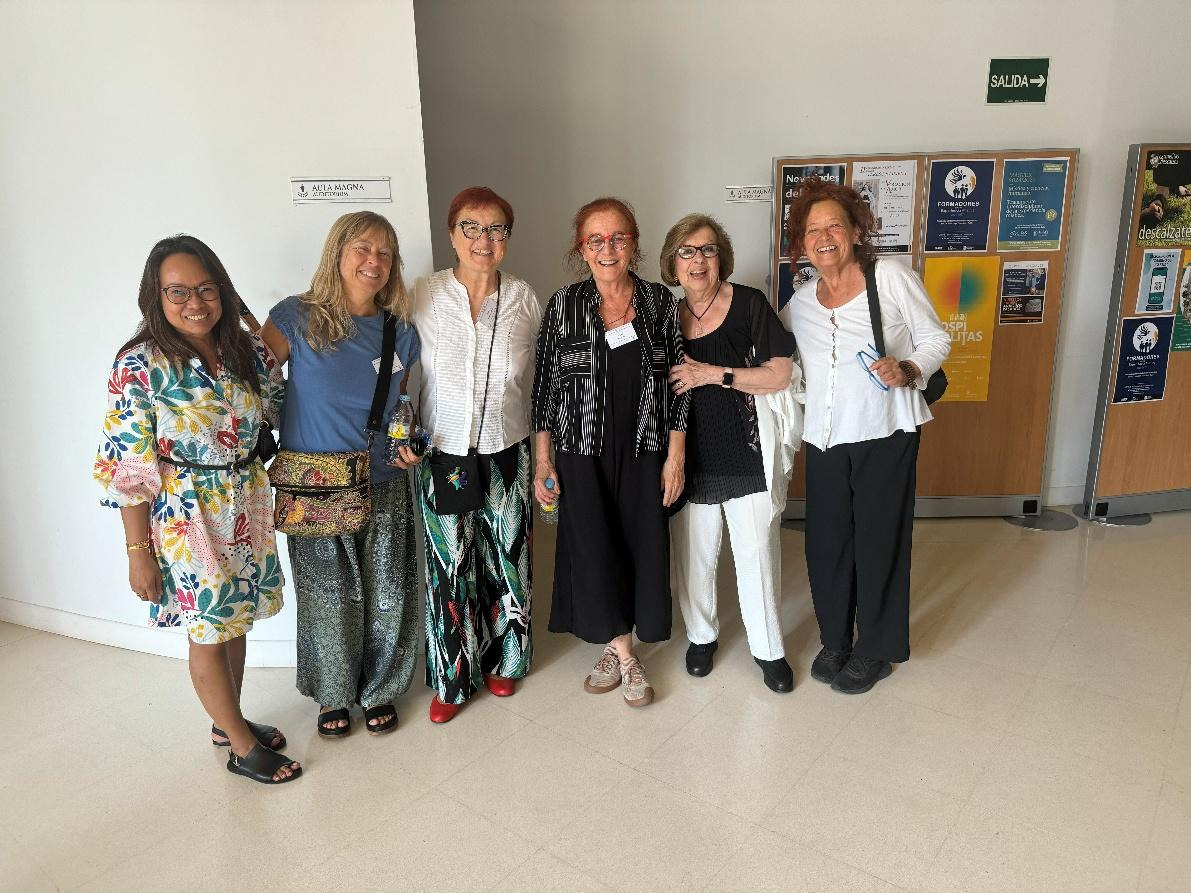
The main strength of this book lies in its clear methodological intention: it departs from any drive to establish “winners” or affirm spiritual hierarchies and instead proposes a horizon of mutual intelligibility. Dialogue is based on an intellectual generosity that is rare in this type of encounter: each tradition presents itself and interprets itself, to be understood in its own terms, without syncretism or identity dilutions. In addition, the exchange does not take place in an academic vacuum, but is based on a concrete institutional framework that gives it shape, continuity and belonging: CITES as a Carmelite host, the CBS-HKU as a Buddhist academic partner and the Dharma-Gaia Foundation as a promoter and dissemination agent, together with a network of participants that turned the event into a living experience of workshops, rituality and coexistence.
From this common ground, the volume shows that interreligious dialogue does not have to choose between conceptual rigor and experience: when the right balance is sought, understanding becomes simultaneously critical and embodied, something that is not only thought about, but also practiced and lived in. That is why fundamental dialogue is not reduced to quick doctrinal comparisons or to an impersonal inventory of concepts, but rather it finds its meaning in inner life and in the requirement of practice, where shared silence allows traditions to be recognized without being confused.
It is true that the book exhibits the heterogeneity typical of its origin—a bilingual encounter of several days—with different styles and densities; but this diversity, far from weakening it, documents a real exchange and makes it a relevant contribution to the studies of contemporary mysticism, Carmelite spirituality and Tibetan Buddhism. Its final value lies in the honesty of not forcing impossible equivalences and in its commitment to functional and ethical-practical parallels (moral basis, working with the body, discernment, recollection), remembering that all contemplation or realization, to be full, must be translated into compassion and charity.
Useful links:
CITES: International Center of Teresian and Sanjuanist Studies
CBS (TODAY): The Centre of Buddhist Studies of the University of Hong Kong
Daniel Millet Gil has a law degree from the Autonomous University of Barcelona and has a master's degree and a doctorate in Buddhist Studies from the Center for Buddhist Studies of the University of Hong Kong. He received the Tung Lin Kok Yuen Award for Excellence in Buddhist Studies (2018-2019). He is a regular editor and contributor to the web platform Buddhistdoor in Spanish. Millet is the founder and president of the Dharma-Gaia Foundation (FDG), a non-profit organization dedicated to the academic teaching and dissemination of Buddhism in Spanish-speaking countries. This foundation also promotes and sponsors the Catalan Buddhist Film Festival (FCBC). In addition, he serves as co-director of the Buddhist Studies program of the Fundació Universitat Rovira i Virgili (FURV), a joint initiative between the FDG and the FURV. In the editorial field, Daniel Millet directs both Editorial Dharma-Gaia and Editorial Unalome. He has published numerous articles and titles in academic and popular journals, which are available in his Academia.edu profile: https://hku-hk.academia.edu/DanielMillet.


