

This interview with Lama Tsondru conducted by Mireia Pretus was originally recorded in Catalan for the series”Testimonies of the history of Buddhism in Catalonia” of the Catalan Coordinator of Buddhist Entitats. It presents the extraordinary trajectory of a woman who is not only one of the main figures of Tibetan Buddhism in Spain, but also a pioneer, since she contributed to the founding of the first Buddhist center in Spain, Samye Dzong Barcelona in 1977, on the initiative of Ákong Tulku Rinpoche*.
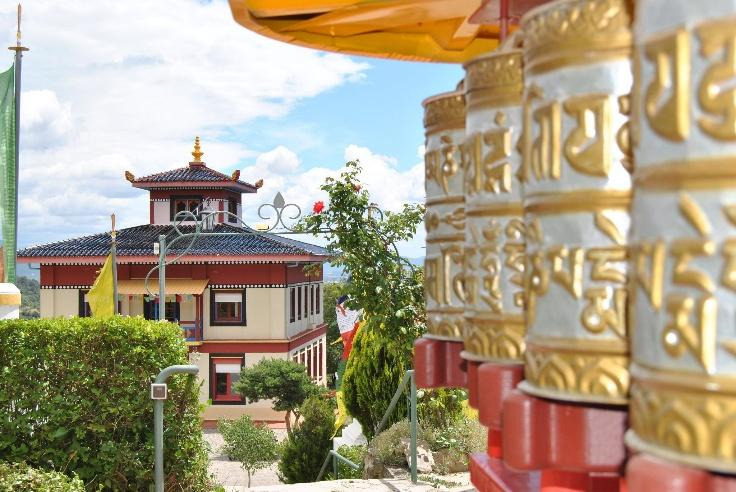
Since 1978, Lama Guelongma Tsondru, whose civil name is Lourdes Clapés, has dedicated her life to sharing the Buddha's teachings, teaching meditation and Buddhist philosophy not only at Samye Dzong Barcelona, but at various centers throughout Spain, Europe, America and Africa. He has been a key person in the establishment and development of the Samye Dechi Ling Monastery in Santa Coloma de Farners, and has provided fundamental support to the consolidation of other centers such as those in Manresa and Las Palmas de Gran Canaria.
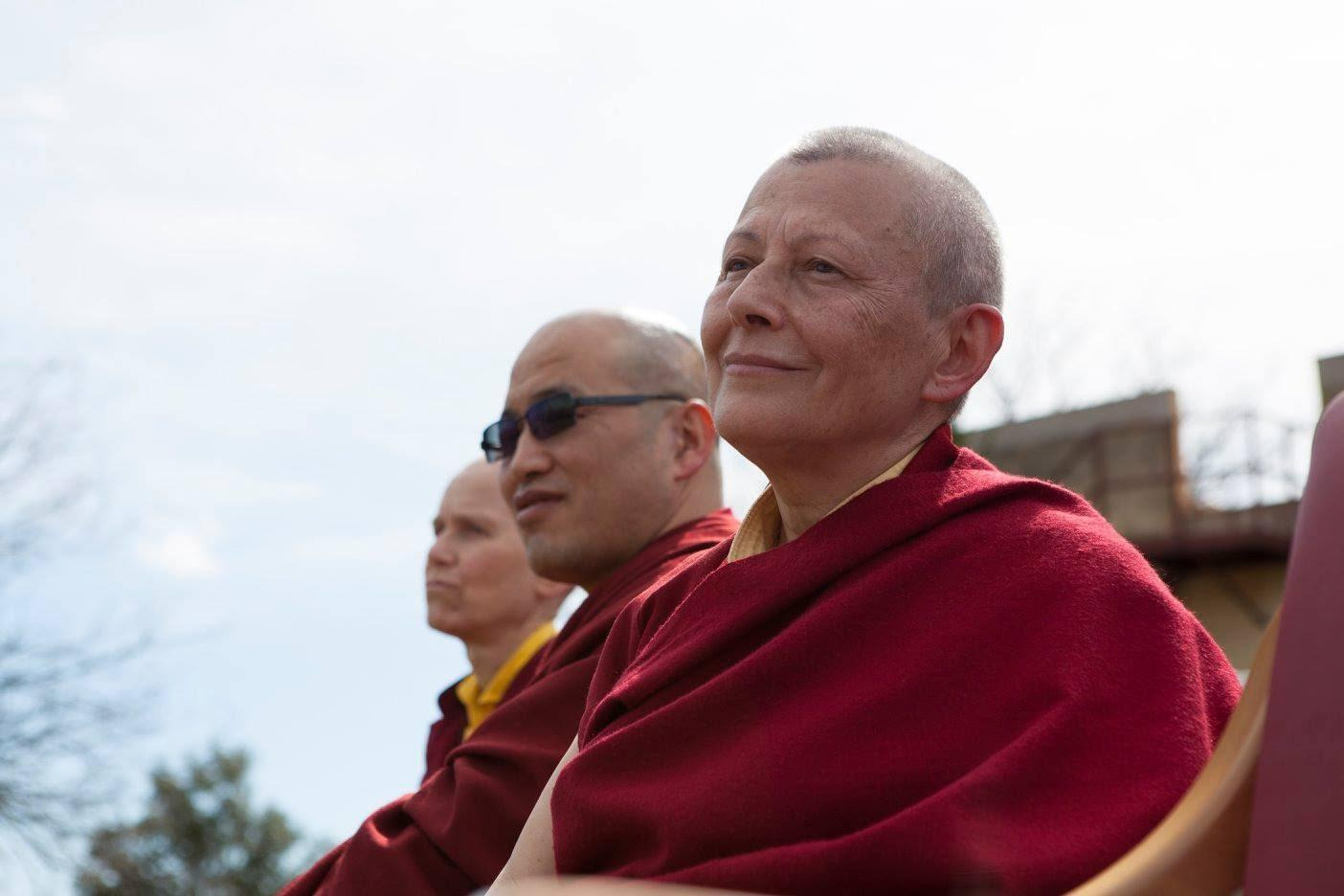
His in-depth knowledge of Tibetan Buddhism is based on a solid theoretical background. He has received, among others, teachings and transmissions from great teachers such as His Holiness the 14th Dalai Lama, the 16th Karmapa, the 17th Karmapa, Gyaltsab Rinpoche*, Kalu Rinpoche, Thrangu Rinpoche, Khenpo Tsultrim, Gyamtso Rinpoche and Khenpo Lhabu. She is a disciple of Ákong Rinpoche and Tai Situ Rinpoche. Beyond his vast philosophical wisdom, he has exceptional practical experience in meditation as he has been in strict retreat for more than 13 years, including two traditional retreats lasting four years each. The unique combination of her deep knowledge and meditative experience makes her one of the most important teachers of Tibetan Buddhism in the Spanish-speaking world.
Ordained in 1987 and recognized as a Lama in 2001, her commitment extends to today's society. Driven by the wisdom of the Buddha and his teachers, Lama Tsondru participates in various projects that seek the benefit, peace and happiness of all beings. She is the representative of the Rokpa Foundation in Spain and has promoted, through her participation in interreligious dialogue groups, understanding and harmony with other religious traditions. She is also the co-founder of Sakyadhita Spain, a platform that brings together Buddhist women of all traditions through communication.
In this first part of the interview, Lama Tsondru describes the initial difficulties in establishing the first Buddhist center in Spain in 1977. It was a time when Buddhism was practically unknown and its practices and rituals were legally prohibited. Fortunately, they managed to establish a center in Barcelona and bring together a community over time. In addition, it highlights the arrival of great Tibetan teachers, such as Ákong Rinpoche, who was especially influential due to his simplicity and pragmatism. It also shares that Buddhism has been gaining ground, and emphasizes the humility and patience necessary in mutual learning between spiritual traditions and cultures.
Mireia Pretus: Good morning, Lama Tsondru. To begin, let's talk about the origins: you promoted the establishment of the first Buddhist center in Spain, in Barcelona, in 1977. How did this center originate and how do you remember its early years?
Tsondru Blade: These were a curious few years because we had to deal with Buddhism a bit on the sly. People didn't know what it was, and if we wanted to rent a place to set up a center, we had to say that we were a yoga group, since yoga was beginning to be known, but Buddhism was not. In many places, even if we said we were a yoga group, we were denied rent, and if we mentioned that it was for Buddhism, the answer was the same. Finally, we found a small center in Poble Sec, on Carrer de la França in Barcelona.
At that time, Franco had died a couple of years ago and the situation was still quite unstable. Here in Catalonia we were dependent on the civil government. We had to go fill out a form stating that on that day we were going to hold a meeting with more than seven people, because if the police came, we could present that paper. We did this two or three times in meetings and then they told us that it was no longer necessary, which was a relief.
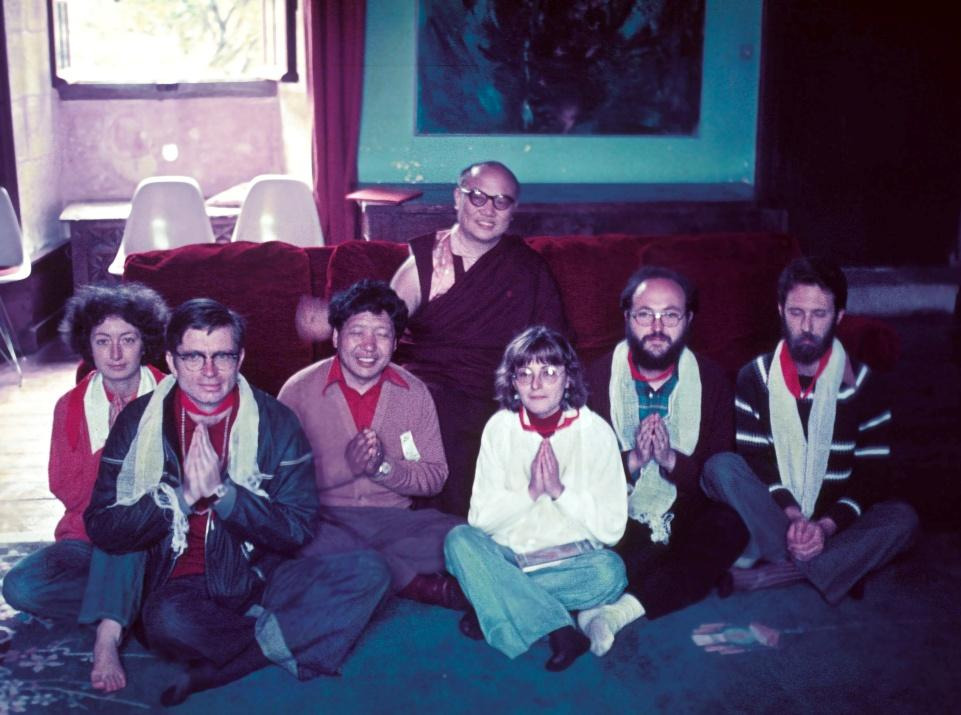
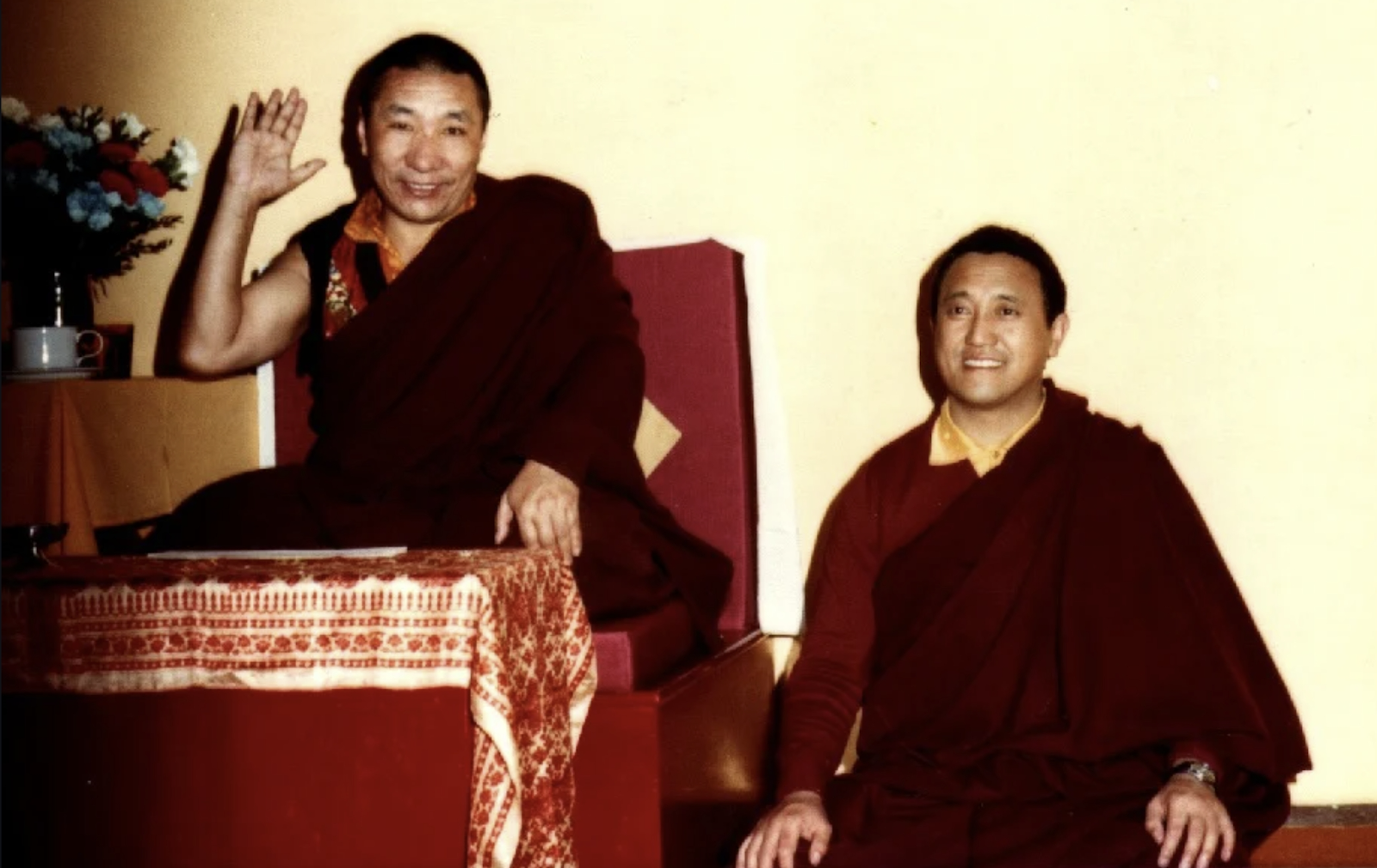
At that time, with Ákong Rinpoche, a lot of people came to meet the first lama who came here. They knew him and kept telling each other that he didn't look like a lama, because their idea of a lama didn't match him. He wasn't a monk, he was dressed in pants and a shirt. In addition, they were used to Hindu teachers with long hair and a serene face. He, on the other hand, was someone very practical and normal. Finally, we formed a good group, perhaps because he was an incredible teacher. Some teachers also came from France from Kagyü Ling.
That's where the Panillo, Dag Shang Kagyü, came from. We wanted to be legally established, so we managed to form a center, a cultural organization that we called Dagpo, which is the name of Gampopa. We published four books under the name of Dagpo. We kept insisting and they told us that, at that time, with socialism already established, it was the best time to submit the papers. We went to a notary, we got it, introduced it and finally they gave us the name “Karma Kagyü of Tibetan Buddhism”.
The funny thing is that they thought that we were “the Buddhists of Spain”. After us, another group wanted to register with the Ministry of Justice as Buddhists, but the ministry wrote to us and told us that we had to endorse them. So all the groups, all of us who came at the beginning, had to make a letter endorsing them and saying that they were Buddhists. This lasted until, after many groups, they realized that there were many Buddhists and that it could not be that some would endorse the others. Then they stopped doing it. From there everything opened up and all Buddhists could go directly to the Ministry of Justice without problems.
MP: And what memories and anecdotes do you have from that time, with the first students and the courses you offered?
LT: At that time I was working as a teacher and I was also in charge of the school. I was very busy and every night I had nightmares thinking about the lamas who were coming, that I didn't have the center ready. I always had that anguish that something would happen, that I didn't have everything under control. The responsibility of running a Buddhist center at that time, when there was none, was quite heavy. Little by little I gathered a good group of people.
We spent a year and a half in that first place, but then we rented a very large apartment in the Eixample, on Diputación Street, where great lamas of the lineage came, such as master Khenpo Tsultrim Gyatso, among many others. A few of us stayed there to live, so it really became a center because we lived there and used it for activities.
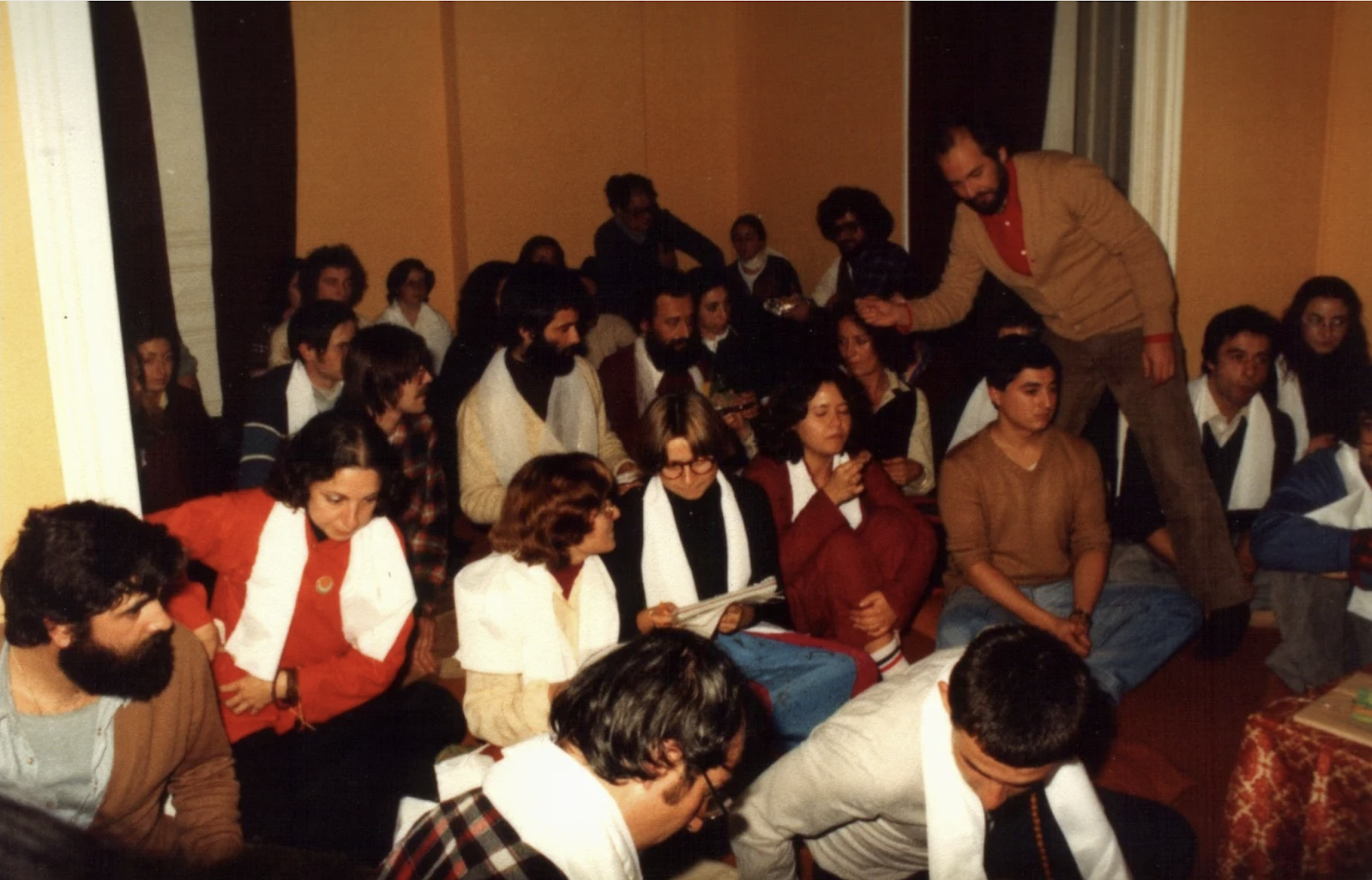
We were fortunate that at that time there were no other Buddhist centers, so the most important teachers came to our house. Tai Situ Rinpoche was coming, Gyaltsab Rinpoche was coming, even Karmapa himself. All of them passed through the apartment on Diputación Street. It was a golden age. Later, a few years later, the teachers began to travel more to America and to other places that were more interesting to them, but at that time they were coming to Barcelona, and it was a real joy.
MP: And the students? How did you see that cultural exchange, that encounter between two cultures and spiritual traditions that were so different at that time?
LT: There were some problems, because there were many questions addressed to the lamas, sometimes with a critical tone. For example, they questioned topics such as reincarnation: “Why reincarnation?” , “And what you're doing here, this ceremony, doesn't it look like Christianity?” There was a lot of criticism of what we were doing. But, little by little, people began to understand it. It was a very new era, everything was new.
There were no books on Buddhism at the time. People had read things like The Third Eye from Lobsang Rampa and they were looking for a lama who would enlighten them, who would touch them here (on their forehead) and that would help them to “open the third eye”. It took years to make them understand that The Third Eye it was a novel and that all that had nothing to do with real Buddhism.
MP: And the teachers? How was that culture shock for them? What was your impression of coming to Barcelona and connecting with these students?
Tsondru Blade: The teachers were very patient and accepted everything very well. They never got angry, they always answered kindly. Sometimes they did small “miracles” to move students. For example, if someone recorded them, they managed to make the recorder stop or turn on by itself. That shocked them a lot, because they were looking for some kind of miracle and the teachers did these little things to make them realize that they really had some power and that they weren't so “dumb” as some people thought at the beginning.
MP: And how was the relationship with other spiritual traditions in those early years?
LT: It was a period of encounters and discoveries. There was a certain curiosity and also some suspicion, but little by little, more open and respectful relationships were established. It was a period of mutual learning.
MP: How was the relationship with other Buddhist traditions at that time?
Tsondru Blade: It was really good because we were all Buddhists and we were together. For example, Gelugpa from Ibiza were moving from place to place, but we were friends. Some of them passed on to us and eventually settled in Barcelona. They were called Nagarjuna and it was at that time that they came to Barcelona because Geshe Rinpoche came and Geshe's translator was Wangchen. We were friends. When Ákong Rinpoche or some important lama came, we would invite Geshe to our house and eat together, talk... It turns out that the Geshe and Ákong were from the same town. It was a time when Buddhism was very kind, very simple. We all knew each other. It was a beautiful stage, with a lot of closeness. Then there was an explosion, a lot of Buddhist centers began to appear and we lost that initial connection, that feeling of a more intimate community.
MP: And how was the relationship with other spiritual traditions, such as Christian ones?
LT: At that time I became very involved in the interfaith issue. I was in several interfaith groups. The most interesting was the monastic interreligious group, which brought together monks and nuns from Montserrat, some Hindus, some Muslims, and others. We did it for six or seven years. We met about three times a year and talked, shared. It was very, very interesting. We left it after those years because we had already come to a deep understanding. It was a very enriching experience.
MP: It has been many years since he started and he has done a lot of retreats, more than 13 years in retirement. What did you discover about yourself in those retreats? Can you share some of your experiences?
LT: The first three-year, three-month and three-day retreat in Europe for Westerners was started by Kalu Rinpoche in France. I was about to go, but it was already closed. Then, Ákong Rinpoche said he would do another one in Samye Ling, and I signed up quickly because going deeper into Tibetan Buddhism seemed like a wonder to me.
In 1984, we began to prepare for several years. We went to Samye Ling several months a year, learning Tibetan, practicing Chöd and other practices. Finally we entered the retreat. We were two houses: in one there were nine women and in the other eight or nine men. We never saw each other during the retreat. We were completely isolated. They taught us all the fundamentals of Buddhism, from the forewords to the tantras and the yogas of Naropa. It was incredibly enriching.
Towards the end of the retreat, I thought I wanted to continue. I felt that this was just the beginning, that if I came out as a lay person, it would distract me. So I decided to become a nun right there. Tai Situ Rinpoche went up to the retreat and ordained me a nun, although not completely.
When we finished the retreat, it was announced that another one would start, and I immediately decided to stay and do it too. I spent four more years in retirement, in total it was quite a few years. At the end of the second retreat, my teacher, Ákong Rinpoche, told me that enough was enough, that I should go to the center of Barcelona because everyone was waiting for me there. They had bought the apartment from Pau Claris, so I went there.
The retreats seemed wonderful to me, but I think you have to be prepared for them. Not everyone is ready for something like that. It is necessary to understand very well what Buddhism is and to be able to leave behind many things, especially your way of thinking. If you don't, what you learn is mixed with what you already know, and you end up believing that what's new is just an extension of your old ideas. That can block you.
The retreat is an incredible experience. You are locked in a house with a small garden, with a group of women of different nationalities. Some are pleasant, others have their peculiarities. One leaves the window open, another closes it, one prefers a certain type of food, another doesn't... A very important part of the retreat is patience, learning to work together in harmony. That is a fundamental part of the process.
MP: What did you discover about yourself at that retreat?
LT: I found out that I didn't know anything. I had studied a lot of things before entering the retreat and I thought I knew more than the others. But I realized that I knew absolutely nothing. Then I started to absorb everything they taught me, and I found it fascinating. However, I also understood that this was only the beginning and that we needed to continue to deepen.
I also found that I was quite patient because I didn't get mad at people. My teachers even commented that no one had complained about me and that I had not complained about anyone either. That was a big compliment for me.
MP: What advice would you give to beginners who want to introduce themselves to Buddhism and do meditation practices, but not long or advanced retreats?
LT: There is something in Buddhism that is very important and is called “the vision”. Vision means what you understand, what clear ideas you have about life and about how everything works. This is a fundamental step. It's essential to try to analyze the things you believe about life and people, and compare them to what the Buddha says. It is an exercise in introspection to understand what your vision is, because in samsara the vision we have is usually quite wrong.
For example, there are aspects of Buddhism that are very important for beginners. One of them is Mahayana Buddhism, especially the practice of Lojong, which is the training of the mind. El Lojong It teaches you how to live with others, how to develop sympathy and love for them, and how to stop focusing so much on the ego, because the ego doesn't make you happy. The whole part of the Lojong is very important because it helps you cultivate a more altruistic attitude and to work with your emotions.
Another indispensable aspect is to understand karma and past and future lives, because this is what gives a correct and profound vision of existence. Karma explains how our actions, thoughts and words create marks in our unconscious mind, and these marks are accumulating and strengthening. In the future, these brands determine our experiences and our way of seeing life.
If people could understand karma and past and future lives, even if it were only this concept, the world could change. Especially for Buddhists, this would be the first essential teaching. However, it is very difficult for people to assimilate it, because they tend to think that karma is something very simple: “If you do one thing, something else happens”. For example, if you give a slap, you'll probably get another one. But what's more difficult to understand is the past: where do certain problems come from? Why do I have a difficulty if I haven't done anything wrong? Why does this happen to me if it's not my fault?
An understanding of karma allows you to face situations in your life in a very different way, with more acceptance and less despair. It's a change in perspective that can transform how you live and how you relate to the world.
*Although you can sometimes see the other variants (“rimpoche”, “rinpoché”, “rinpoche”), the spelling “Rinpoche” is the one most frequently used in specialized texts.
You can read the second part of this article here


