

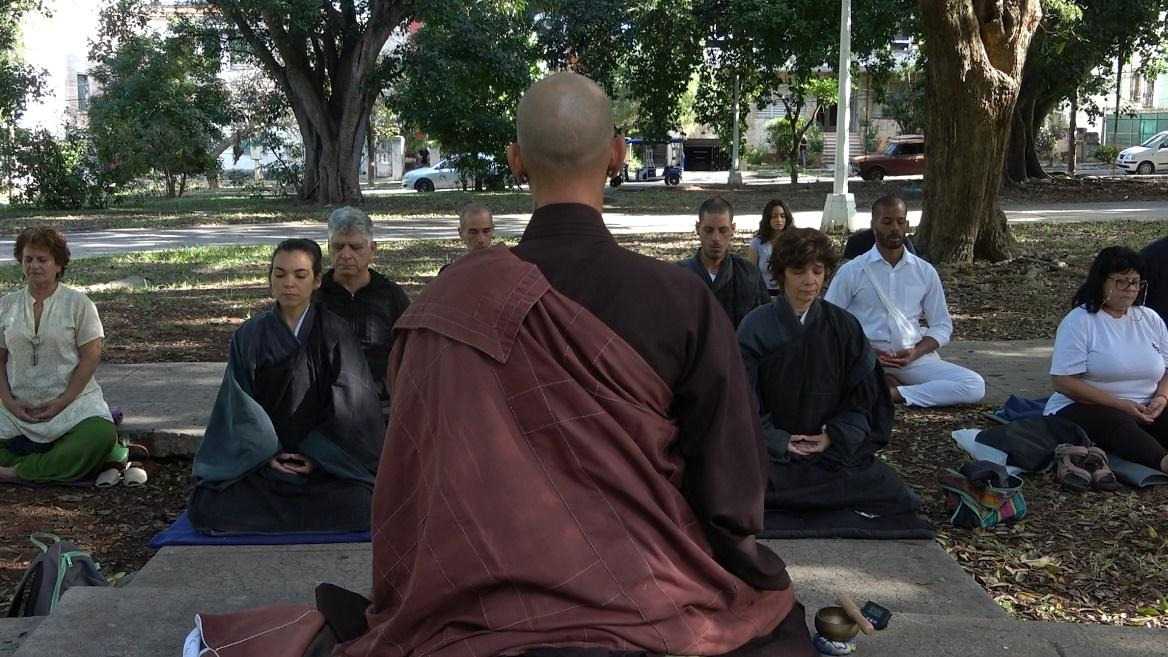
Spanish-language Buddhist cinema is still taking its first steps, but it is already emerging as a promising phenomenon. After a possible start with the feature film Dawn of Buddhism in Cuba, now presents us with another proposal, more technically and artistically complex: the short film The Zen Breath.
It is interesting that this second Buddhist audiovisual production in Spanish also comes from Cuba. In both titles there is Daylet Acevedo, who was the editor of the aforementioned feature film and to whom we owe the credit for her aesthetic achievements. Now, Acevedo presents a 16-minute experimental film, without dialogue, dedicated to a Cubanized vision of Zen, of which she herself is a practitioner.
Let Acevedo introduce us to his work through the synopsis:
Taisen Deshimaru Roshi said: “Teachers compare Zen breath to “the mooing of cows or the exhalation of a newborn screaming baby.”
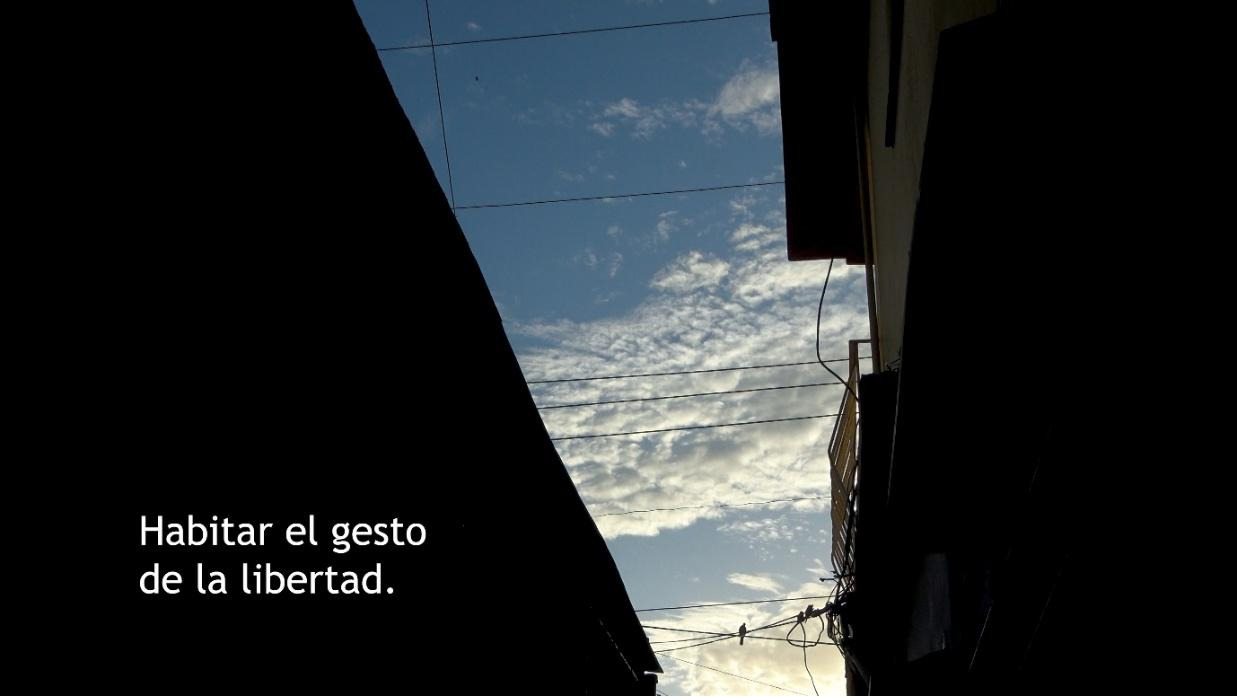
Inhabiting the gesture of freedom involves both pain and relief. Only by accepting one and the other can peace be experienced. In this work, the images and sounds of everyday life are the vehicle for an inner, intimate, singular and, at the same time, plural journey.
Perhaps we Cubans just need to do a “great zazen” and, in that long exhalation of discernment, look at ourselves with our lights and shadows; recognize and love our deep wound with compassion, to take responsibility for it and for our destiny. Already aware of the fragile nature of freedom and the value of the present moment.
A visual and sound experience
With exuberant images and a sound of tacit eloquence, the film is structured in two halves: the first focused directly on the world and the second open to meditative sensations. It could be conceived, roughly speaking, as a representation of “mindfulness” brought to the screen, where each plane invites us to appreciate the present moment. In it, everything (flowers, suspicious cats, pedestrians) expresses the Buddha's nature as an original and intrinsic condition of every living being.
The dialogue-free format is especially appropriate for the topic addressed by Acevedo: a Buddhist teaching that, since its inception, has sought to transcend verbal language. Indeed, if an audiovisual proposes an aesthetic approach to Zen, should it resort to the logical or the paradoxical? To traditional narration or to the direct experience of reality? The answer is obvious: a Zen documentary about Zen can only talk heart to heart. And Acevedo achieves that purpose.
From a technical point of view, the tape rests on a restless camera, which moves with equal interest to a home stove or to an old man who cleans weeds, which could suggest a Samu to the most attentive spectator. Nothing is left out of visual exploration, as if the mind were to be free enough not to focus solely on contemplating a single leaf on the tree, but on encompassing the entire forest.
An important note for future viewers: do not allow the visual to obscure the auditory. As Acevedo herself says in the synopsis, the vehicle for inner travel in this film is “the images and sounds of everyday life”. It's as important to see as it is to hear The Zen Breath.
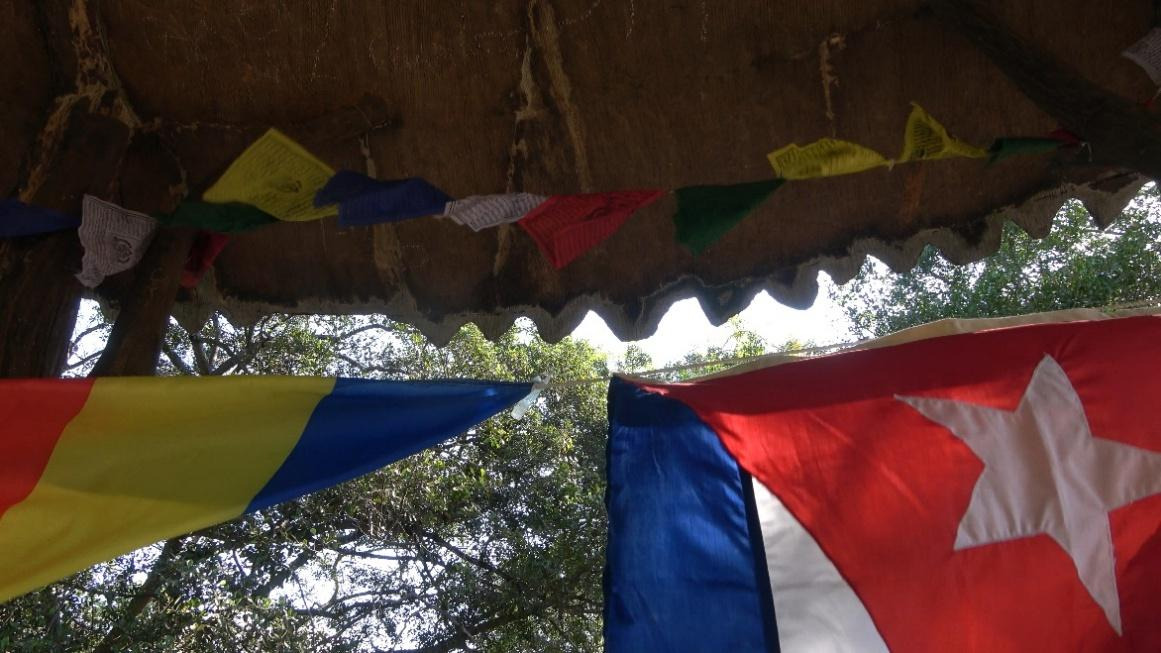
In this wordless, but not silent, landscape, things happen naturally, effortlessly. The lizard that perches quietly on a branch or the bird that sings without the need for hyphens testify to a whole that occurs without premeditation or theories, free of preconceptions. In the words of Acevedo: “No plans or guarantees... for nothing”. Empty mind, Zen mind.
The abrupt but fluid changes of scenery manage to break with a superficial formalism, adopting instead a bold creative freedom. This dynamism conveys the feeling of undergoing constant metamorphoses, where change is the only perpetual scenario in which everyday life and the spectator himself become protagonists. In other words, Acevedo shows us, through his camera, the beauty of impermanence.
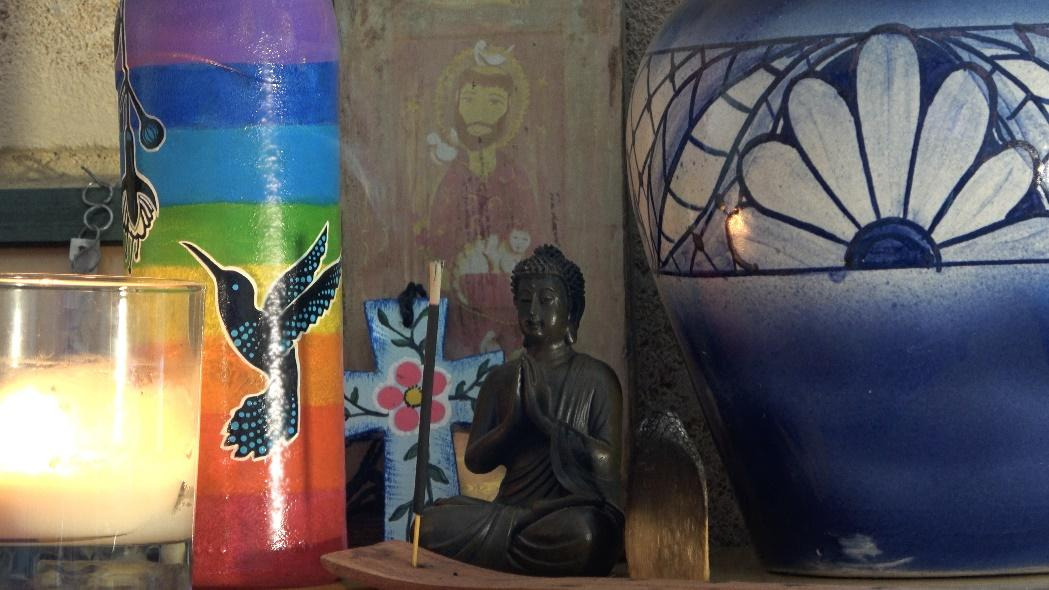
This is how the film unfolds, teaching us through visual metaphors and pure contemplations. For example, it evokes impermanence through the contrast between day and night. The recurrent return to the clouds, as a symbol of purity and transformation, suggests teaching about the omnipresent buddhadic nature in all beings. Likewise, the recourse of affirming a concept through a text on the screen and then questioning it with another fleeting epigraph insinuates emptiness.
These interpretations are, of course, subjective. This is a personal reading about pure images of everyday life. But this is precisely the game proposed by Acevedo: opening a uniquely free space for the subjectivity of the public, thus encouraging the spontaneity of a unique visual interpretation.
A Cuban Context and Its Spirituality
During the first section of the film, it is essential to hear the local voice of the context. Havana presents itself to the spectator with all its simultaneous ugliness and beauty. The views of Havana scenes, the accelerating urban deterioration, the openness to the Caribbean and the tropical luminosity (who seems like another character in the film) combine to show a cracked vision of Buddhism.
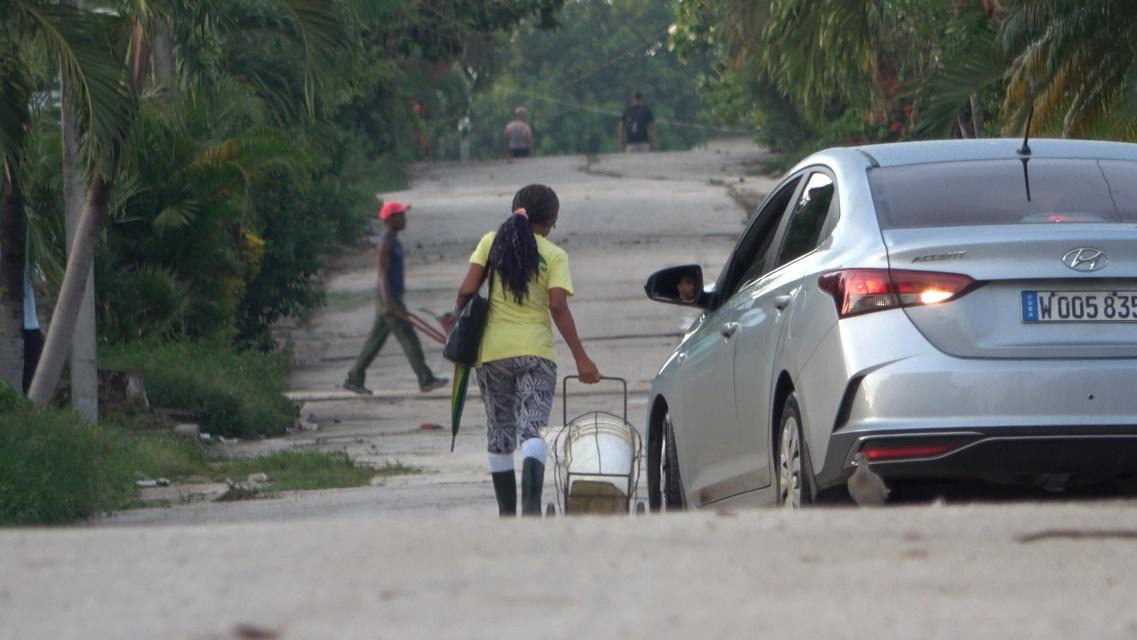
Subtly, social criticism also slips into elements such as the contrast between passers-by dressed in humble clothes and wellies, and the modern car that leaves them behind with indifference.
The first section of the audiovisual, in which there are no direct references to Buddhism, is perhaps the most profound in its implementation of Zen. Let us remember that the latter is not limited to the clerical or to temples and liturgies. That meditative serenity that is so appreciated in a Zazen as in Japanese gardening influenced by Buddhism, it points to an ultimate reality that is reflected in any daily act, from a tea ceremony to contemplating the sea on the Havana Malecón.
Conclusion
In the opinion of this author, The Zen Breath achieves that immersion in the sacredness of everyday life that characterizes Japanese art with Buddhist influences, which also pays attention to objects of common life and elements of nature, such as waterfalls and flowers. With similar intuitions, this short film by Daylet Acevedo seeks to emphasize the experiential in a purely Cuban context.
It is, therefore, an alliance in which the typical non-conventionalism of Zen meets contemporary experimental art, challenging traditional norms and conventions that limit artistic or spiritual creativity.
Perhaps the only valid criticism of the documentary is that its combination of audiovisual aesthetics and Zen philosophy is too technical for the uninitiated spectator. However, if it is a question of communicating a call to “be present”, this work fills a gap in Cuban audiovisual production with great dignity.
Finally, it remains to invite the reader to enjoy this film production, a documentary about time, about a city immersed in it and about a people that inhabit it. His message, in a nutshell, urges us to be free right now. The only one that exists.
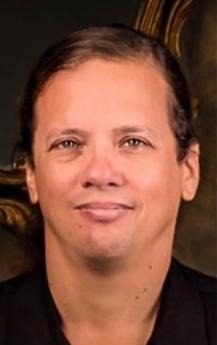
Douglas Calvo Gaínza (Havana, February 24, 1970) holds a doctorate in Philosophical Thought from the University of Havana (2025) and a Ph.D. with a specialization in Theology from the Graduate Theological Foundation (United States). He holds three master's degrees in humanities and socio-religious studies and works as assistant professor of history of philosophy, ancient Greek and Eastern thought at the aforementioned University of Havana. In addition, he is a specialist at the Center for Psychological and Sociological Research (CIPS), within the Department of Socio-religious Studies.
As a student of Buddhism, he has published in various academic media with an Ibero-American reach and is a documentary filmmaker specializing in this religion. Two of his essays on Carmelite mysticism and Eastern philosophies have been awarded second prizes in the second and third International Prize “Teresa of Jesus and Interreligious Dialogue” (2023 and 2024), sponsored by the Teresian-Sanjuanista International Center in Avila, Spain. He has been collaborating regularly with BDE since 2020.


